Why Multi‑Site Facilities Teams Choose Consolidated Services
/For facilities management teams responsible for estates spread across the UK, daily operations can feel like a constant juggling act. Multiple sites, multiple contractors, and multiple service streams, all while trying to track statutory compliance, PPM schedules, work orders and reactive issues.
Manual paperwork, scattered certificates, and spreadsheet-driven compliance only add to the complexity.

Manual paperwork, scattered certificates and spreadsheet‑driven compliance
Their Challenge:
Organisations managing multi-site estates typically face the same operational pressures. Multiple contractors across multiple service lines increase compliance risk, strain internal resources and make it harder to plan, forecast and make data-led decisions.
This complexity slows teams down and creates inefficiencies across the estate.
Their Service Requirement:
Gas, HVAC, electrical, fire safety, water, fabric, BMS, and catering equipment, each often handled by different suppliers. This leads to inconsistent standards and reporting, variable SLA performance, repeated site visits for similar tasks, and a dispersed geographical footprint.

The daily juggle between calls, systems and suppliers
When a property portfolio spans from Scotland to the South West, relying on lots of local contractors becomes a juggling act. Each works differently, uses different paperwork, and follows different standards, so service quality varies by region. Response times are inconsistent, there’s no shared site knowledge, and issues repeat because no one has visibility of the whole estate. Managing dozens of small providers also increases admin, complicates scheduling, and makes compliance tracking harder. In short: local contractors are great for single sites, but these contracts can’t scale nationally.
The high administrative burden of coordinating contractors, chasing certificates, logging work orders, updating compliance trackers, and reconciling invoices takes up valuable time.
Limited compliance visibility, due to having to manually track statutory tasks across tens or hundreds of locations, means FM teams often lack real-time compliance status, asset condition insights, lifecycle data, and predictive maintenance indicators. This creates operational blind spots and increased risk.
Their Solution:
More growing organisations, from not-for-profit to retail and leisure to health and social care, begin to rethink their traditional fragmented model as their number of locations grows. Moving towards a consolidated FM services delivery model is usually the result: lower costs, clearer visibility, fewer admin burdens, and stronger compliance performance across entire estates.
A modern consolidated model doesn’t mean losing the value of local relationships. The best national FM partners integrate regional expertise and local in-house contractors, giving organisations the responsiveness, community connection and specialist skills that smaller companies offer, while still providing the consistency, compliance control and national coverage of a single provider. It’s the best of both worlds: agility at ground level, strength and stability at scale.
Why this Solution:
Consolidated FM Services & Labour
A consolidated FM model replaces multiple suppliers with a single, self-delivering partner responsible for all hard services across the estate.
This approach provides: one partner, one contract, one helpdesk, one national labour force, one compliance and reporting platform - a national self-delivery model that is built precisely for this challenge, supporting multi-site organisations across the UK.
How Consolidation Saves Time, Money and Admin
✔ Facilities teams juggle multiple suppliers, invoices and systems. Consolidation removes that complexity. Instead of managing 10–20 contractors, teams work with one delivery partner, instantly cutting admin, reducing duplication and simplifying site access, scheduling and reporting.
Result: Fewer individual site visits.
✔ With a national, self-delivered engineering workforce, response times improve and costs fall. Engineers are locally based, attend sites faster, travel less and build site familiarity, driving higher first-time fix rates and more predictable outcomes.
Result: Fewer site visits and significant cost reductions.
✔ One set of standards across compliance, workmanship, RAMS, reporting and SLAs ensures consistency and reduces risk. Multi-skilled engineers allow tasks to be grouped into single visits, minimising disruption while completing HVAC, electrical, gas, life safety and fabric works together.
Result: Higher compliance performance.
✔ All activity is tracked through a single, real-time compliance dashboard, replacing spreadsheets with full estate visibility. Clients gain clearer data, stronger compliance and better control.
Result: Cleaner data, better decisions, and a safer, more predictable estate.
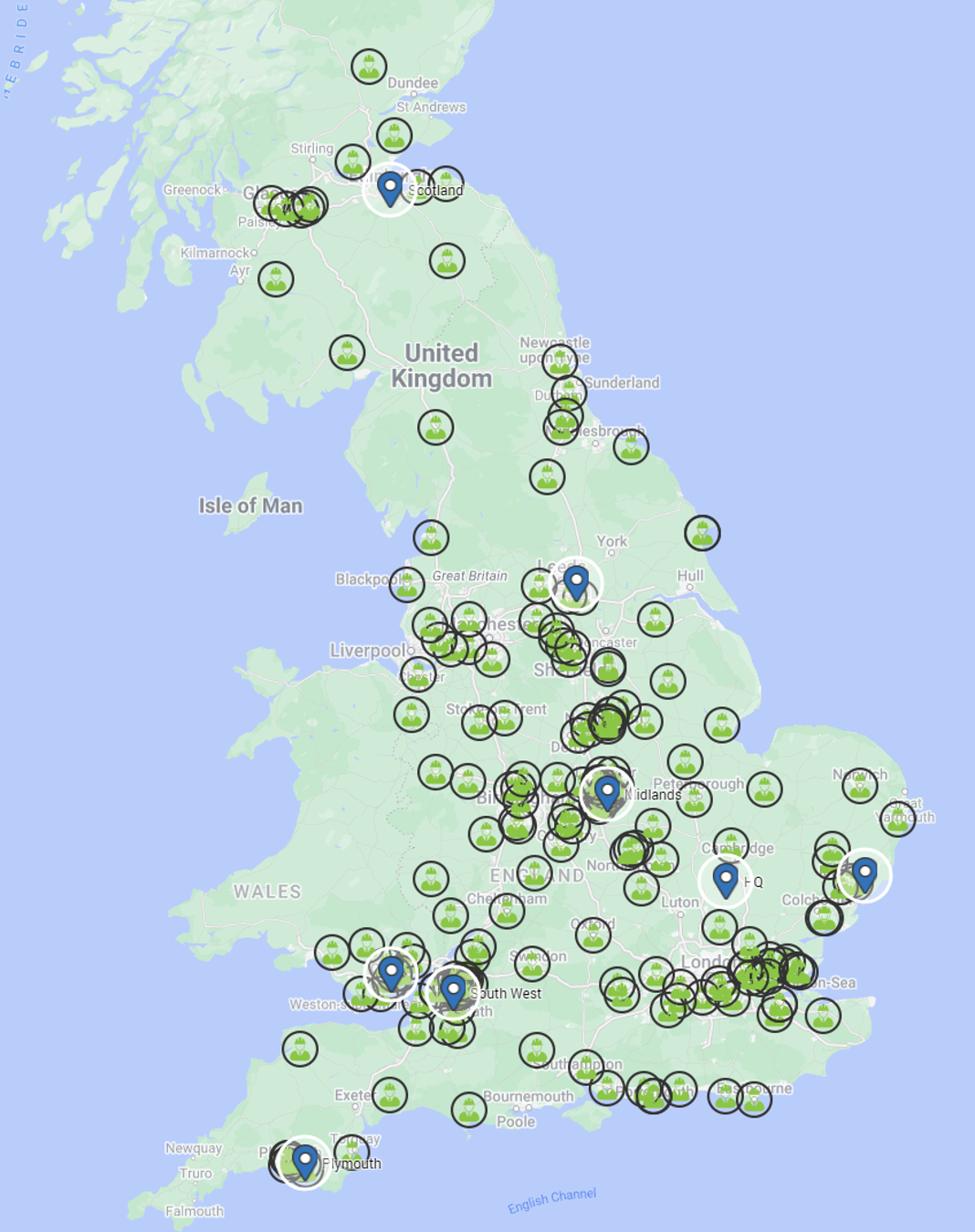
A full National Network of Local Engineers
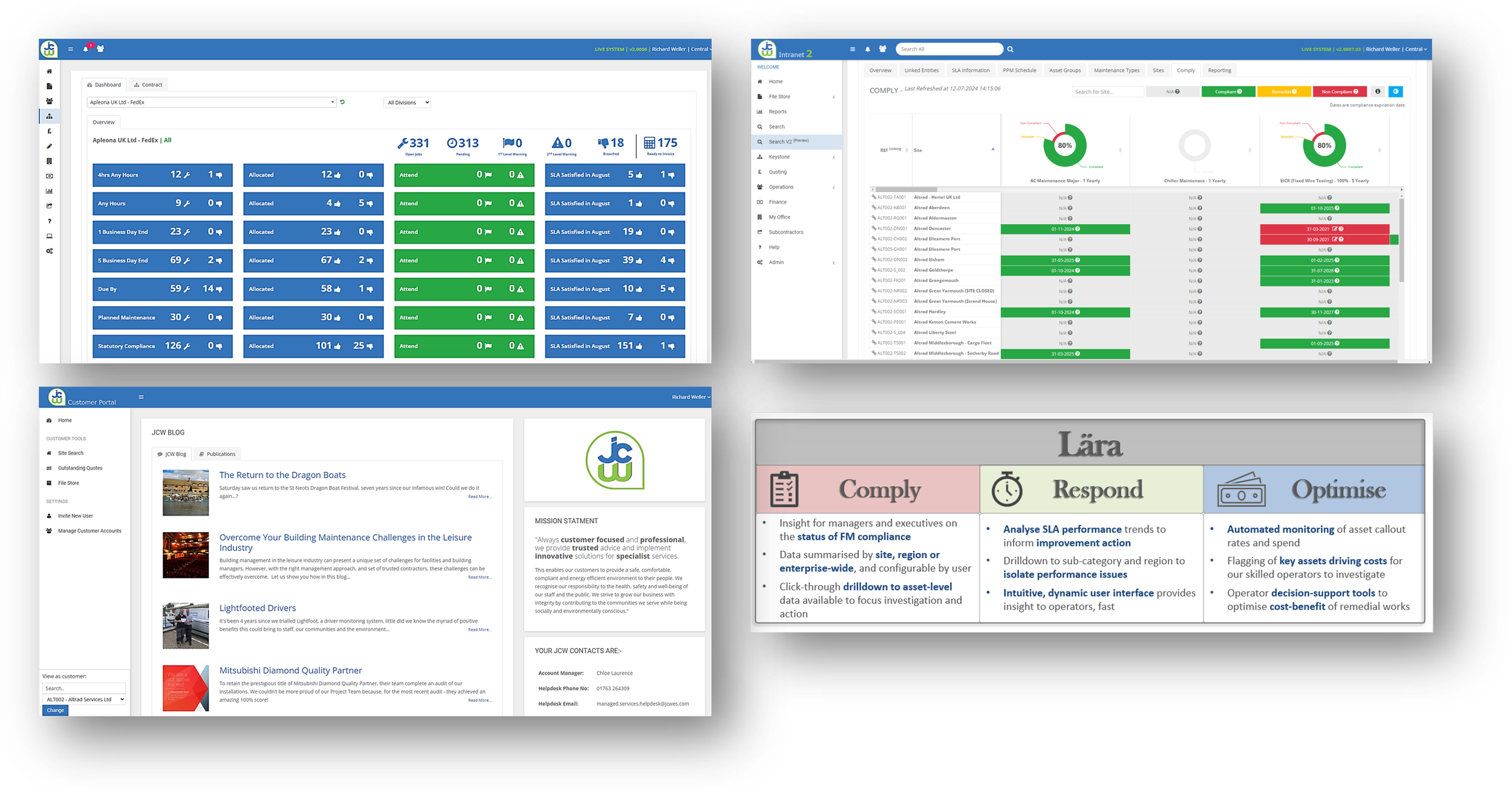
real‑time compliance dashboard delivering estate‑wide visibility and control

One Standard. One Team. Consistent Compliance and Admin Across Every Site
Our Outlook for the Next 12 months
Rising fuel costs, tighter compliance scrutiny and persistent labour shortages are forcing multi-site organisations to rethink how they manage their estates. Consolidated FM is no longer a ‘nice to have’, it is becoming a strategic necessity. As portfolios expand and complexity increases, consolidation provides the control, consistency and resilience needed without adding internal workload.
The challenge for many FM teams is finding the right partner. Smaller regional contractors deliver great service but cannot scale nationally. Larger FM providers offer coverage, but often at the expense of flexibility, speed and personal partnership.
This leaves many organisations caught between “too small to scale” and “too big to care”.
JCW bridges that gap. With over 180 directly employed engineers nationwide, JCW delivers true national coverage without outsourcing, slow bureaucracy or one-size-fits-all processes. Clients benefit from faster decision-making, direct access to senior leadership, and a partner that adapts as their estate grows.
Whether managing 20 sites or 500+, consolidation with the right partner reduces complexity, strengthens compliance and creates a more predictable, future-ready estate.
Simplify Your Multi-Site Operations
If you’re reviewing how your estate is managed, or looking to reduce complexity across multiple sites, we’d be happy to share how a consolidated approach could work for your organisation.